
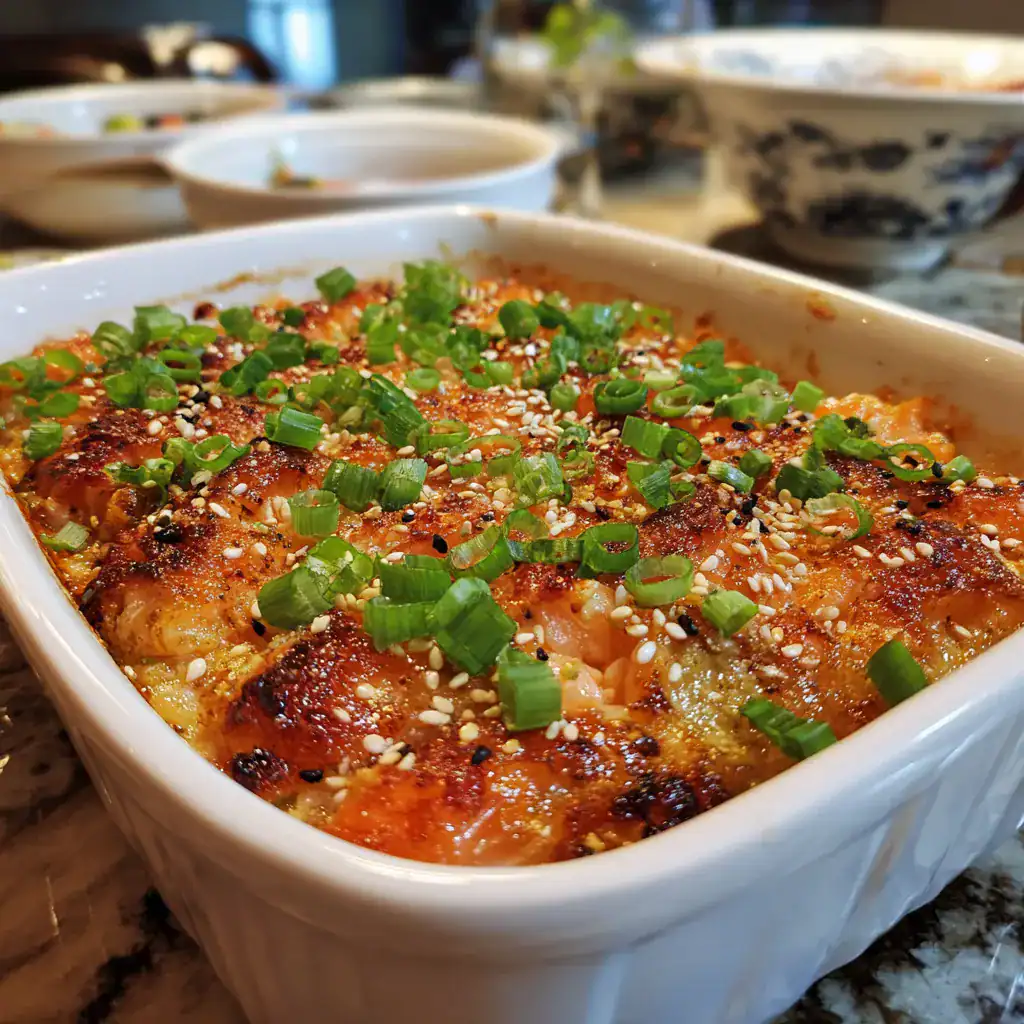
Salmon sushi bake has quickly become one of my favorite dishes to make — it’s flavorful, simple, and nourishing. I’m Elsie Graham, recipe creator and health-focused home cook at DailySuperTasty in Michigan. A few years ago, I transformed my health through cooking balanced meals. What began as a personal journey grew into sharing recipes that changed my life. This dish is the perfect example: everyday-friendly yet special enough for gatherings.
Table Of Contents
Introduction to Salmon Sushi Bake
What is Salmon Sushi Bake?
Salmon sushi bake is a warm, layered take on traditional sushi that’s baked in the oven and served casserole-style. Instead of rolling individual sushi pieces, you assemble sushi rice, savory salmon, creamy toppings, and flavorful garnishes in a baking dish. The result is a dish that’s cozy, rich in umami, and incredibly easy to share. It’s a perfect balance of Japanese-inspired flavors with the convenience of a one-pan bake, making it an instant hit for family dinners, potlucks, and parties.
Why This Trendy Dish Became a Household Favorite
This dish exploded in popularity because it takes everything people love about sushi — fresh fish, seasoned rice, and flavorful sauces — and removes the intimidation of rolling. With salmon sushi bake, anyone can enjoy sushi flavors without special tools or techniques. It’s also incredibly customizable: you can go spicy, keep it mild, or even make a cream-cheese-free version for a lighter twist. The layered format means every bite delivers that perfect combination of flavors and textures.
If you enjoy creative, oven-baked recipes that bring sushi flavors to your table, try our Tuna Dip Recipe for another easy, crowd-pleasing seafood dish.
Print
Salmon Sushi Bake: Easy, Flavor-Packed Recipe You’ll Love
- Total Time: 30 minutes
- Yield: 6 servings
Description
A warm, layered twist on classic sushi, this Salmon Sushi Bake blends seasoned rice, flaky salmon, creamy Kewpie mayo, and spicy sriracha for a comforting yet elevated casserole-style dish — perfect for family dinners or gatherings.
Ingredients
2 cups cooked sushi rice
2 tbsp rice vinegar
1 tsp sugar
1/2 tsp salt
2 sheets nori, crumbled
12 oz salmon fillet, cooked and flaked
3 tbsp Japanese mayonnaise (Kewpie)
1 tbsp sriracha
1 tbsp soy sauce
1 tsp sesame oil
2 tbsp furikake seasoning
1 green onion, thinly sliced
Instructions
1. Rinse and cook sushi rice. While warm, fold in rice vinegar, sugar, and salt. Spread evenly in a baking dish.
2. Sprinkle crumbled nori over the rice layer for added umami.
3. In a bowl, mix flaked cooked salmon with soy sauce, sesame oil, Japanese mayo, and sriracha.
4. Spread the salmon mixture evenly over the rice and nori in the baking dish.
5. Top with furikake and green onions. Bake uncovered at 375°F (190°C) for 12–15 minutes until bubbly.
6. Let rest for 5 minutes. Serve warm with nori sheets or lettuce wraps.
Notes
Use sushi-grade salmon for optimal flavor, or substitute canned wild salmon for convenience. Customize with avocado, unagi sauce, or tobiko. Let the bake rest 5 minutes before serving for clean, flavorful portions. Serve with nori sheets or lettuce leaves for hand-held bites.
- Prep Time: 15 minutes
- Cook Time: 15 minutes
- Category: Main Course
- Method: Baked
- Cuisine: Japanese-Inspired
Essential Ingredients for the Perfect Salmon Sushi Bake
Key Proteins: Choosing Fresh or Sushi-Grade Salmon
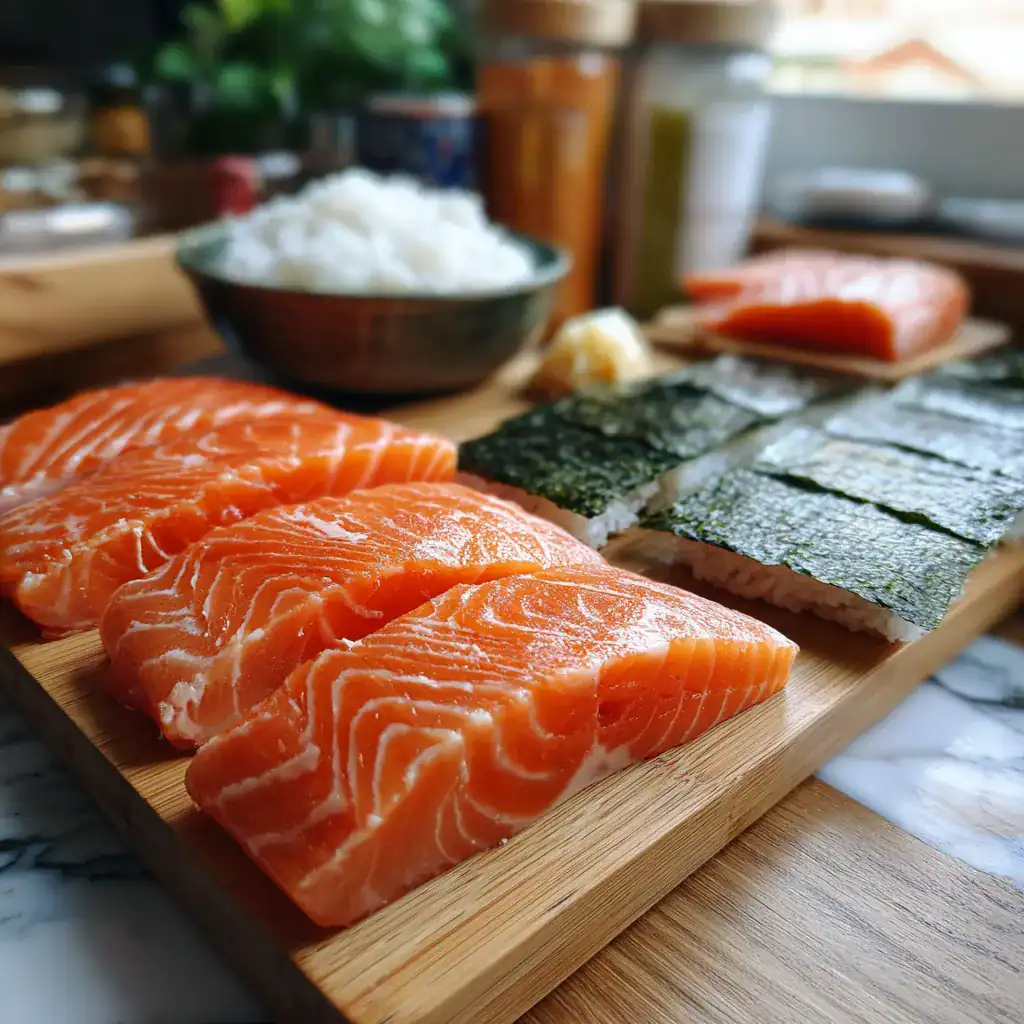
The star of this dish is the salmon, and your choice here makes all the difference. Sushi-grade salmon offers the cleanest, freshest flavor and is safe to enjoy even when slightly undercooked in the center. If sushi-grade isn’t available, choose fresh, high-quality fillets with vibrant color and no fishy smell. Baking enhances the natural richness, so even regular fresh salmon can shine in this recipe. For extra convenience, some home cooks opt for canned wild salmon — a budget-friendly alternative that still delivers great taste.
Must-Have Pantry Staples for Authentic Flavor
The magic of salmon sushi bake comes from its layers of seasoned rice, creamy sauces, and umami-packed toppings. You’ll need sushi rice, rice vinegar, nori sheets, Japanese mayonnaise (like Kewpie), and soy sauce as the foundation. Sriracha or chili paste can bring a little heat, while sesame seeds add nutty crunch. A sprinkle of green onions or furikake seasoning on top gives that final burst of freshness.
For more high-protein, low-carb ideas that pair perfectly with this bake, explore our High-Protein Low-Carb Recipes.
Optional Add-ons for a Gourmet Touch
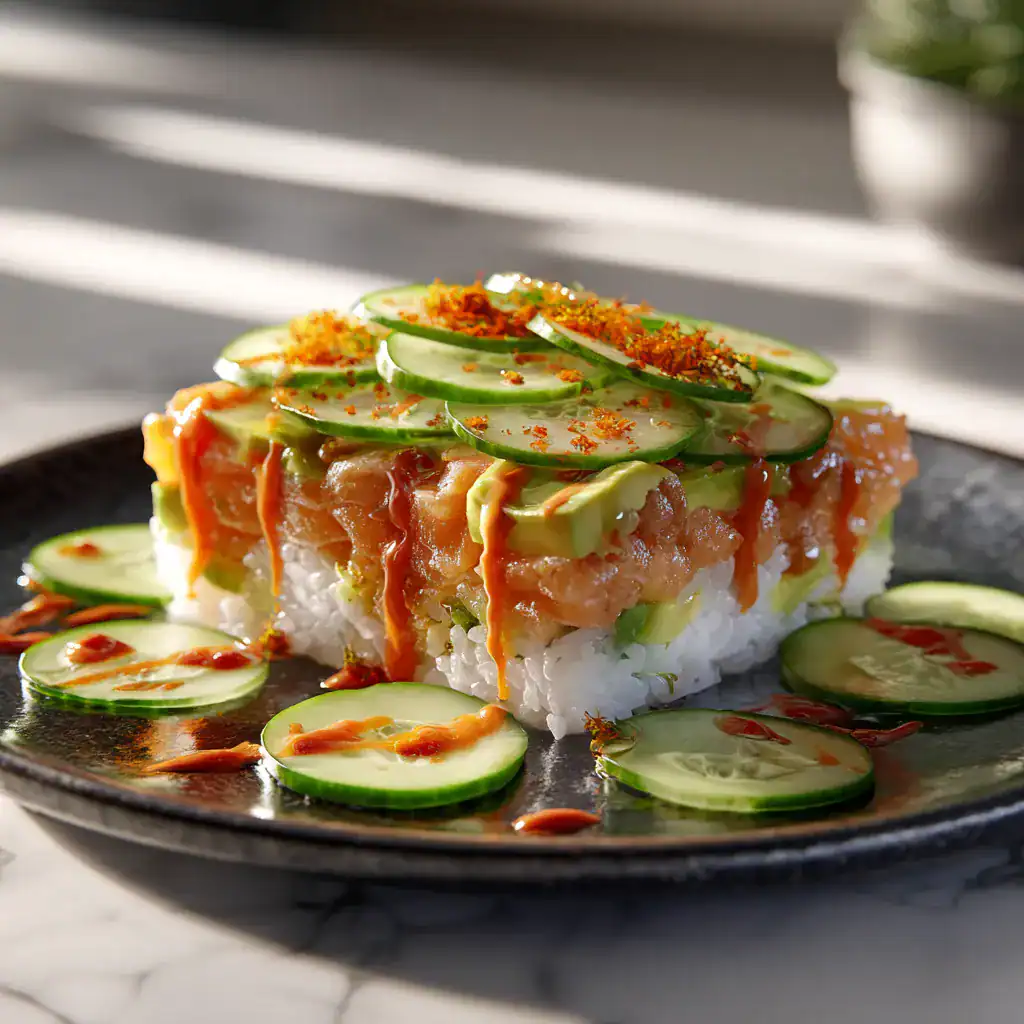
Want to elevate your bake? Add diced avocado, thinly sliced cucumber, or even a drizzle of unagi sauce. If you’re feeling adventurous, tobiko (flying fish roe) provides a pop of color and briny flavor. These extras make your salmon sushi bake look restaurant-ready without adding much prep time.
| Ingredient | Purpose | Notes |
| Sushi-grade salmon | Main protein | Fresh, vibrant color, no odor |
| Sushi rice | Base layer | Short-grain, sticky rice works best |
| Rice vinegar | Seasoning for rice | Balances flavor |
| Nori sheets | Umami layer | Toasted for best taste |
| Japanese mayonnaise | Creaminess | Kewpie preferred |
| Soy sauce | Salty depth | Low-sodium optional |
| Sriracha | Heat | Adjust to taste |
| Furikake seasoning | Garnish | Adds crunch and flavor |
How to Prepare Salmon for Baked Sushi
Marinating Salmon for Maximum Flavor
The secret to a rich, savory salmon sushi bake is all in the marinade. Even though salmon has a naturally buttery flavor, a short soak in a simple blend can take it to the next level. Combine soy sauce, rice vinegar, and a touch of sesame oil for depth, then add minced garlic or ginger for warmth. Marinate your salmon for at least 15–30 minutes in the refrigerator — long enough to let the flavors infuse, but not so long that the texture changes. If you want a spicy kick, mix in a teaspoon of sriracha or chili paste.
Looking for another flavorful way to enjoy salmon? Our Grilled Chicken Margherita (Olive Garden Copycat) offers similar balance between protein and freshness, perfect for dinner rotation inspiration.
Best Practices for Cooking Salmon for Sushi Bake
When it comes to cooking, you have a few options. The classic method is to bake the salmon at 375°F for 12–15 minutes until it flakes easily with a fork. If you’re aiming for extra juiciness, cover it loosely with foil for the first half of cooking, then uncover to let the top brown. You can also steam or poach the salmon if you prefer a softer, lighter texture. Once cooked, use a fork to gently shred the fish into bite-sized pieces before layering it into your sushi bake.
Pro Tip: If you’re wondering “How to cook salmon for baked sushi?” — the simplest way is to bake it in the oven until just done, then mix with your creamy sauce before assembling the dish. This ensures every bite is flavorful and moist.
Step-by-Step Salmon Sushi Bake Recipe
Preparing the Sushi Rice Base
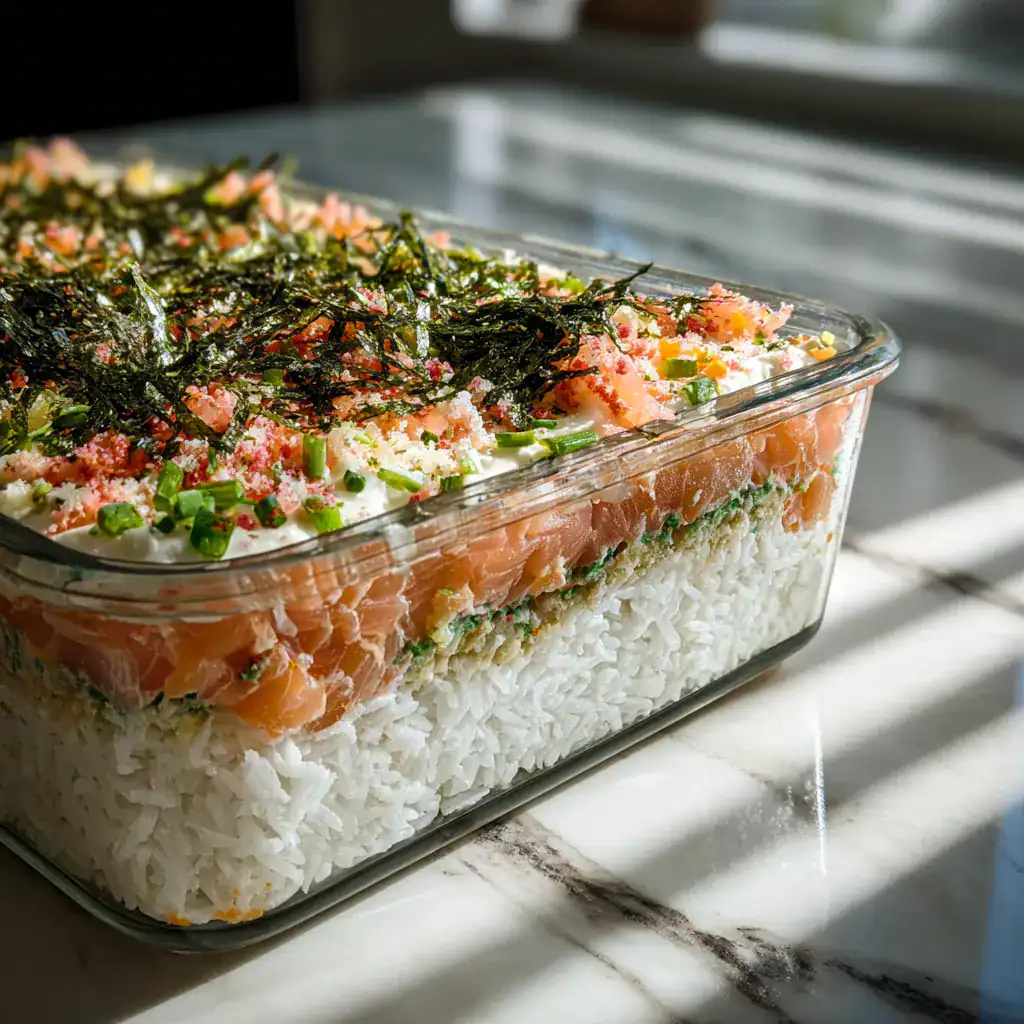
The foundation of a great salmon sushi bake starts with perfectly seasoned sushi rice. Begin by rinsing short-grain rice under cold water until the water runs clear — this removes excess starch and helps achieve the right texture. Cook the rice according to package instructions or in a rice cooker for best consistency. While it’s still warm, gently fold in rice vinegar, a pinch of sugar, and salt. This gives the rice its signature sushi tang. Spread the rice evenly into the bottom of your baking dish, pressing lightly to create a firm base without smashing the grains.
Layering Salmon, Toppings, and Sauces
On top of the rice, spread a thin layer of crumbled nori for an extra punch of umami. Next, add your prepared salmon — whether shredded baked salmon or lightly seasoned sushi-grade pieces — evenly over the rice. In a small bowl, mix Japanese mayonnaise and sriracha (or your preferred sauce) and drizzle generously over the salmon. Sprinkle with green onions, furikake seasoning, or sesame seeds for extra texture and flavor.
Baking Time and Temperature for Perfect Results
Preheat your oven to 375°F (190°C). Bake your salmon sushi bake uncovered for 12–15 minutes, or until the top is bubbly and slightly golden. If you like a crispy finish, switch to broil for the last 1–2 minutes, keeping a close eye to avoid burning. Once out of the oven, let the bake rest for 5 minutes before serving — this helps the layers set so each portion holds together nicely.
Serving Tip: Use a spatula to scoop portions directly onto small sheets of nori or lettuce leaves for hand-held bites that mimic sushi rolls.
Variations of Salmon Sushi Bake You’ll Love
Spicy Salmon Sushi Bake
If you like a little heat, this variation is for you. Mix your shredded baked salmon with Japanese mayonnaise, sriracha, and a splash of soy sauce before layering it over the rice. For extra fire, add chopped jalapeños or drizzle chili oil on top before baking. This creates a creamy, fiery topping that pairs beautifully with cool cucumber slices or avocado.
Salmon Sushi Bake Without Cream Cheese
Many classic recipes use cream cheese for richness, but you can skip it entirely for a lighter, dairy-free version. Replace the cream cheese with extra Japanese mayonnaise or mashed avocado for creaminess without heaviness. This tweak keeps the dish velvety while making it friendlier for lactose-sensitive eaters. If you’re wondering “Can you make sushi bake without cream cheese?” — the answer is absolutely, and you won’t sacrifice flavor or texture.
Healthy & Low-Calorie Versions
To lighten up your salmon sushi bake, swap regular mayonnaise for a light or avocado-based mayo, reduce the amount of rice, and add more vegetables like shredded carrots, zucchini ribbons, or sautéed spinach. You can also use brown sushi rice for extra fiber and nutrients. These adjustments keep the dish satisfying while aligning with a balanced eating plan.
If you love lighter recipes like this, don’t miss our guide on Gluten-Free Protein Pasta — a great option for those who want nutritious yet comforting meals.
Expert Tips for Texture, Flavor, and Presentation
How to Get That Crispy Golden Top
The hallmark of a visually irresistible salmon sushi bake is its golden, slightly crisp topping. To achieve this, bake uncovered for the final few minutes, then switch to your oven’s broil setting for 1–2 minutes. Keep a close eye — the difference between perfect and burnt can be seconds. For extra crunch, sprinkle a light layer of panko breadcrumbs over the sauce before baking.
Balancing Sweet, Savory, and Umami Flavors
A memorable salmon sushi bake hits all the right notes. Use rice vinegar in your sushi rice for a bright tang, soy sauce for saltiness, and nori or furikake for deep umami. If you enjoy a touch of sweetness, add a small drizzle of honey or mirin to your sauce mix. The goal is a flavor profile that feels layered and balanced, so every bite has depth.
Perfect Garnishes for Instagram-Worthy Presentation
Before serving, garnish your salmon sushi bake with thinly sliced green onions, a sprinkle of black and white sesame seeds, and a final drizzle of spicy mayo or unagi sauce. For color and freshness, add sliced avocado or cucumber ribbons to the plate. Arranging small nori sheets or lettuce cups on the side also encourages guests to scoop and wrap their own portions.
Common Mistakes to Avoid When Making Salmon Sushi Bake
Overcooking or Undercooking the Salmon
One of the most frequent issues is leaving salmon in the oven too long, which can dry it out and dull its flavor. For a tender bite, bake at 375°F for 12–15 minutes and check for doneness with a fork — it should flake easily but remain moist. On the flip side, undercooked salmon can result in an unpleasant texture and uneven flavor distribution.
Using the Wrong Rice Type
Sushi rice isn’t just any rice — its short grains and natural stickiness are essential for the base of a salmon sushi bake. Using long-grain rice like basmati or jasmine will result in a loose, crumbly base that won’t hold layers together. Always rinse sushi rice before cooking to remove excess starch and avoid gumminess.
Skipping the Resting Time After Baking
Patience pays off. Cutting into a salmon sushi bake too soon can cause the layers to collapse and the flavors to feel less integrated. Let the dish rest for 5 minutes after removing it from the oven. This allows the rice to firm up slightly and the sauce to thicken, making each portion easier to serve and more flavorful.
Serving, Storing, and Reheating Salmon Sushi Bake
Creative Serving Ideas for Gatherings
Salmon sushi bake is perfect for sharing. Serve it casserole-style with a spatula, alongside small sheets of nori so guests can scoop and wrap portions like hand rolls. For a fresh twist, offer crisp lettuce leaves as a wrap option. You can also arrange bite-sized scoops on cucumber slices for a light appetizer that’s still packed with flavor. Adding sides like miso soup or a seaweed salad makes it feel like a complete Japanese-inspired meal.
Pair this dish with a refreshing drink like our Homemade Electrolyte Drink to create a balanced meal that keeps you hydrated and energized.
Best Storage Practices for Freshness
If you have leftovers, store them in an airtight container in the refrigerator for up to 3 days. To keep the texture and flavor intact, avoid leaving the bake uncovered in the fridge — it can dry out quickly. For longer storage, portion the bake into individual servings, wrap tightly, and freeze for up to 2 months.
Reheating Without Losing Moisture
To reheat, place the salmon sushi bake in an oven-safe dish, cover loosely with foil, and warm at 300°F until heated through — usually 10–15 minutes. This gentle method prevents the salmon from drying out. If you’re in a rush, you can use a microwave, but cover the portion with a damp paper towel to retain moisture. Avoid reheating at high temperatures, as it can make the rice hard and the salmon overcooked.
Frequently Asked Questions About Salmon Sushi Bake
How to cook salmon for baked sushi?
The easiest way is to season the salmon lightly, then bake it at 375°F for 12–15 minutes until it flakes easily with a fork. For extra moisture, cover with foil for the first half of baking, then uncover to finish. You can also steam or poach the salmon if you prefer a softer texture.
How long to bake sushi bake at 375 degrees?
Most salmon sushi bake recipes need 12–15 minutes at 375°F. If you want a crispier top, broil for an additional 1–2 minutes at the end, watching closely to prevent burning.
How long to bake salmon in baking paper?
Baking salmon in parchment paper (en papillote) at 375°F usually takes about 15–18 minutes, depending on thickness. The paper helps lock in moisture and flavor.
Can you turn regular salmon into sushi grade salmon?
No — sushi-grade is a label that refers to handling and freezing standards that make the fish safe for raw consumption. While you can’t make store-bought fresh salmon sushi-grade at home, you can still cook it perfectly for baked sushi.
Can you make sushi bake without cream cheese?
Absolutely. Replace cream cheese with mashed avocado, extra Japanese mayonnaise, or even Greek yogurt for creaminess without the dairy. The flavor stays rich and satisfying.
At what temperature do I bake salmon in foil?
Bake salmon in foil at 375°F for 12–15 minutes for fillets, or until the internal temperature reaches 145°F. The foil helps trap steam and keep the fish tender.
Bringing Salmon Sushi Bake to Your Table Anytime
Salmon sushi bake is the perfect blend of comfort food and Japanese-inspired flavor, proving that you don’t need fancy tools or professional skills to make something truly memorable. With a base of tangy sushi rice, layers of savory salmon, and a golden, flavorful topping, it’s a dish that works for casual weeknight dinners, special gatherings, or even meal prep. Whether you keep it classic, spice it up, or make it lighter with healthy swaps, this recipe is endlessly adaptable to your taste and lifestyle.
For more protein-packed recipes that fit any time of day, check out our High-Protein Breakfast Cookies and High-Protein Dessert Recipes.
Love discovering new food ideas? Follow us on Pinterest for daily inspiration and beautiful meal creations!
Join our foodie community on Facebook to share your own Salmon Sushi Bake photos and connect with other home cooks!